Program manager vs project manager: Key differences


Summary
You might be familiar with project management, but have you come across the term program management? Although they sound alike, there are some important differences between the two.
Whether you're searching for the right role for your team or want to improve your work management processes and methodologies, we'll help you understand the differences between a program manager vs. project manager. Not only will you learn the responsibilities of each job title and career path, but you'll also learn which role is right for your team.
How to build a transformational AI strategy from the ground up
The journey of AI adoption is no longer uncharted territory. Supported by research from our Work Innovation Lab in partnership with frontier AI safety and research company, Anthropic, this guide offers a how-to for navigating the journey of AI adoption.
What is a project vs. a program?
A project is a temporary effort with a clear end date and specific goals. A program, on the other hand, is a long-term initiative that includes several related projects working toward a bigger objective. Knowing this difference helps explain how program managers and project managers are not the same.
Here's how they relate:
Projects: Have specific objectives, clear timelines, and defined deliverables.
Programs: Consist of multiple projects that contribute to long-term business objectives with complex dependencies.
Projects and programs both involve size, difficulty, relationships, and uncertainty. The main difference is in scale. Projects are usually smaller and more straightforward, while programs are bigger and involve more complex connections across teams.
What is a program manager vs. a project manager?
Now that you know the basics, let’s look at how these two roles compare and what each one offers your team.
A program manager leads the overall strategy for long-term programs made up of several projects, while a project manager focuses on leading single projects. Here are some more ways these roles differ.
Managing projects: Unlike a project manager, who supervises individual projects, a program manager supervises a group of projects. In other words, they focus on large programs that span multiple small projects. This makes delegating and managing multiple projects a large part of the job.
Managing daily tasks: A project manager's job, on the other hand, focuses on daily project management duties, which include work coordination, resource management, and timeline tracking. This is often done with project management software.
Seniority: Program managers are usually more senior than project managers because they oversee bigger strategies and more complex work.
Responsibilities: Program managers work alongside project managers but may not directly manage them. A great way to identify roles and responsibilities and prioritize tasks is to use RACI charts.
Internal roles: Project managers and program managers have different jobs, but both are important for an organization’s success.
What is a program manager?
A program manager handles long-term program strategy and success metrics. Their tasks range from defining success to overseeing collaboration, and much more in between.
A program manager is helpful when you want to add new programs to your current ways of working, such as Agile or Scrum. They also help oversee project managers and connect daily projects to bigger company goals.
Here's an example of a day in the life of a program manager.
In the morning, you might work on yearly goals based on company objectives and key results (OKRs). In the afternoon, you’ll meet with project managers from different departments to check that projects are meeting program goals. At the end of the day, you’ll report monthly project results to company leaders.
Create a program roadmap template
What is a project manager?
A project manager works on daily projects and tasks. They help keep teams organized and on track, while also helping streamline communication in the workplace.
Project managers make sure goals are met, and team members know what to do. They also work with program managers to keep projects on track with overall objectives.
Here's an example of a day in the life of a project manager.
You might begin your day by checking the progress of your team’s two projects. If something is overdue, you talk with the team lead to help out. Later, you meet with the program manager to review upcoming projects and make sure everything is on track for the month.
What does a program manager do?
A program manager leads complex, long-term efforts that support company goals. They coordinate several project teams, manage budgets, and make sure all projects help achieve the company’s strategy.
The main difference is that project managers focus on daily tasks, while program managers look at the bigger picture. Still, both roles often work together.
Program manager roles and responsibilities
While program and project managers have distinct roles, they share responsibilities, such as overseeing projects and coordinating communication. Universal program manager duties include:
Project strategy development
Quality control
A good candidate will have all of these and more, as well as be a good leader who can coordinate with multiple teams. Here are some additional roles and responsibilities of a program manager.
Implement strategies
Program managers are in charge of coordinating smaller projects with objectives that measure up to company-wide organizational goals.
Program managers also streamline internal processes and define best practices for a collection of projects. This allows project managers to have clear direction when managing various projects.
Other strategic duties include coordinating projects with a project manager to make sure deliverables are aligned.
Oversee collaboration
While project managers tend to focus on introducing collaboration for single projects, a program manager's job is to make sure cross-functional collaboration is happening across departments. This is one of the most rewarding parts of the job.
Program managers also tend to focus on creating program roadmaps for high-level company goals as part of strategic planning. This is slightly different from a project manager, who will create individual project roadmaps.
A program manager may manage collaboration by introducing new tool integrations that streamline communication, such as program management software or team-building games.
Read: 100+ teamwork quotes to motivate and inspire collaborationDefine success metrics
While both a project manager and program manager should be analyzing and reporting on ROI, a program manager is in charge of ensuring that company-wide ROI aligns with high-level objectives.
This means meeting with project managers to ensure one-off projects are hitting initial goals. Program managers will often be the point of contact for reporting ROI metrics to company executives.
Skills and experience
A program manager should have a well-rounded skill set and both project management and workflow management experience. Though some professionals formally study program management and receive project management certification, that's not always necessary.
If you're looking to add a program manager to your team, these are the skills to look for and keep in mind.
Program management skills
Key skills for a strong program manager include:
Organization and planning
Scheduling and program strategy
Reporting and proposal writing
Budget planning
The specific skills needed depend on your organization's requirements and existing team structure.
Beyond any specific skills needed, it's also important for a program manager to have people skills. This will help them coordinate collaboration and inspire teammates to do their best.
Program management experience
A strong program manager will have previous experience in project management or another role focused on managing and organizing projects.
While the number of years of experience needed varies, the average program manager has around five years of previous experience. This differs from project management, which requires less experience depending on the complexity of the particular job.
Common challenges
Whether tackling timeframe delays or budgetary issues, program managers have to overcome obstacles just like other roles within a team. Program managers are in a unique position where they must manage expectations from both above and below them.
Here are some common challenges that program managers often face.
Cross-departmental challenges like unaligned goals and lack of communication can have a negative effect on long-term objectives.
Without direct reports, program managers can face challenges around authority and influence.
With long program timelines, it can be difficult to ensure short-term projects stay on track in order to meet annual goals.
What does a project manager do?
A project manager translates program strategy into individual projects that meet specific objectives and milestones. Their daily responsibilities include organizing, planning, tracking, and completing work within defined timelines.
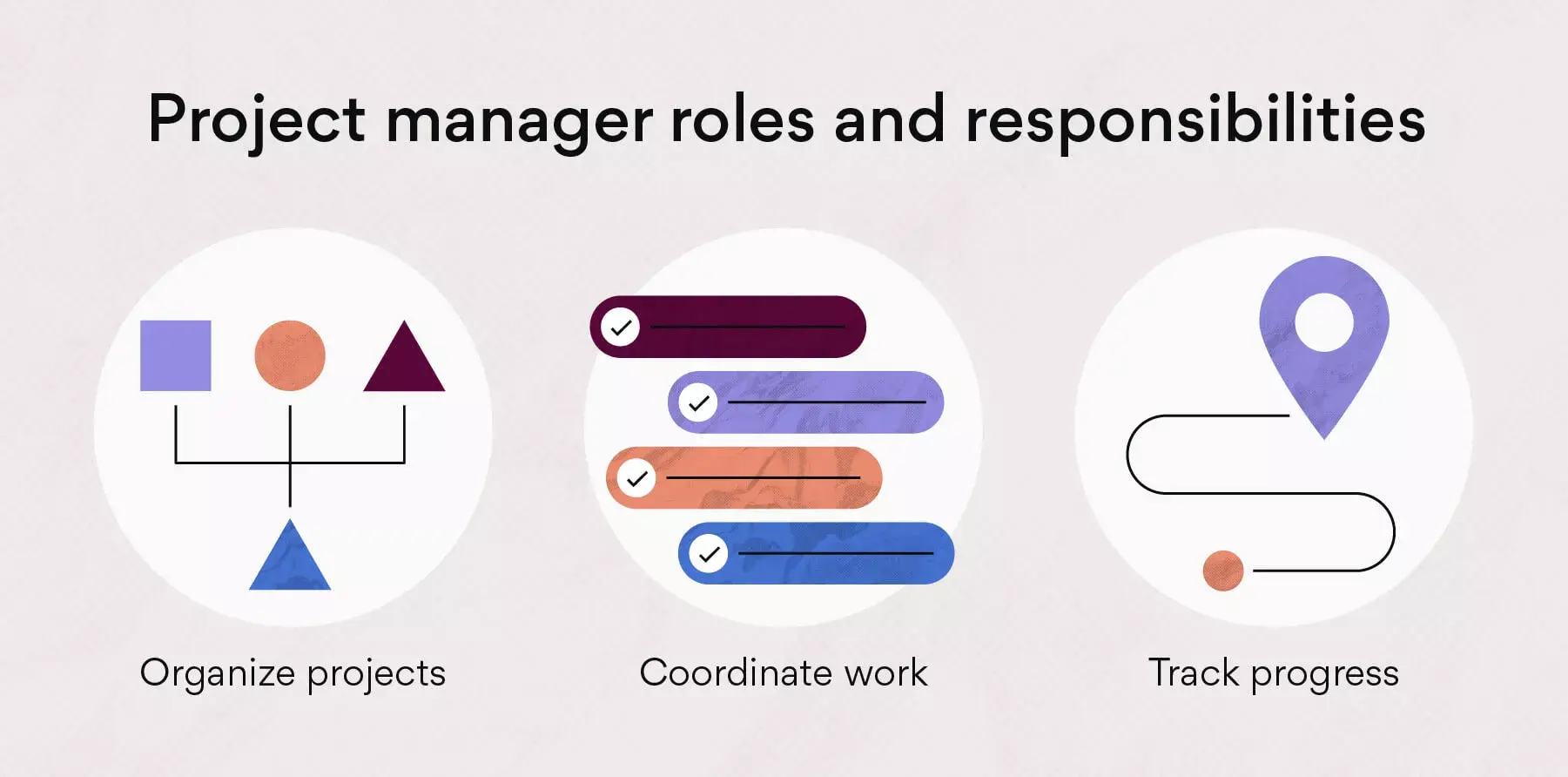
Project managers often work alongside or report to program managers. Other duties include assigning project tasks, keeping projects organized, creating timelines, and tracking project success.
Project manager roles and responsibilities
A project manager's main role is to help keep teams organized and communication aligned. This keeps deadlines and program-level objectives on track. Other roles and responsibilities include assigning tasks and tracking project progress to ensure deadlines are met.
Here are some additional responsibilities to consider when weighing the differences between a program manager vs. a project manager.
Coordinate work
Project managers are responsible for assigning project tasks to the right stakeholders and ensuring they have all the information they need to complete the work. This is especially important to avoid wasting time searching for information. Many teams are working virtually, and 60% of their time is spent on work coordination instead of actual work.
Although project coordination can be difficult, it can improve productivity and team efficiency if done correctly. This allows your team to focus on the deliverables at hand.
Read: How to be more productive: 13 tips to practice todayOrganize projects
Project managers are also responsible for organizing projects. Not only does this require connecting with team members, but it also requires managing project information and stakeholder deliverables.
Some of the key duties include providing team members with accurate information, keeping deliverables moving forward, and leading team meetings throughout the project lifecycle.
Track progress
Tracking project progress is another important task that project managers are responsible for. This requires aligning deliverables with task timelines and ensuring they are on pace with project deadlines.
Progress mapping also requires communicating progress to team members to create project scope visibility and improve collaboration. This can be tricky, especially when working virtually, and requires both patience and problem-solving skills.
Skills and experience
Unlike program managers who typically need around five years of experience, project managers can enter the field with less experience. The main criteria to look for are:
Organizational skills
Communication skills
Work coordination experience
Take a look at these project management skills to get a better understanding of the experience needed.
Project management skills
Project management skills are similar to those of program management, with a couple of big differences. Skills such as organization, planning, and scheduling are essential for both roles. The difference is that project managers work on tight deadlines and need to thrive in a fast-paced environment.
Similar to a program manager role, it's important to continue learning new methods and tools that can help set you apart. Organizations like the Project Management Institute (PMI) offer Project Management Professional (PMP) certification to grow your skill level.
Project management experience
The necessary experience needed to be a project manager will differ depending on the complexity of the role. Most roles require around two years of experience, though some require little to no experience.
Small teams that need help with project planning may be suited for a project manager with little experience. Large teams with complex project deliverables may benefit from a project manager with more experience.
Common challenges
Unlike a program manager, who faces strategic challenges, a project manager faces daily obstacles like communication and productivity issues.
Here are some of the biggest challenges project managers face on a daily basis.
If communication is lacking between stakeholders, deliverables could be missed or, worse, done incorrectly.
Scope creep can become a challenge if a project is going over the planned timeline. This can happen if there is a lack of organization or if the right project management tools aren't in place.
Lack of success metrics can be a challenge when tracking goals and opportunities.
Key differences between program managers and project managers
Understanding the distinctions between these two roles helps you build the right team structure and define clear responsibilities. Here's a breakdown of the core differences.
Aspect | Program manager | Project manager |
Scope | Oversees multiple related projects | Manages individual projects |
Focus | Long-term strategic goals | Short-term deliverables and deadlines |
Timeline | Ongoing, multi-year initiatives | Defined start and end dates |
Seniority | Typically more senior (5+ years experience) | Entry to mid-level (2+ years experience) |
Stakeholders | Executive leadership and cross-functional teams | Team members and direct stakeholders |
Success metrics | Program-level ROI and strategic alignment | On-time, on-budget project completion |
While program managers take a broader view of organizational goals and coordinate resources across initiatives, project managers focus on completing specific projects. Both roles require strong communication and organizational skills.
How program managers and project managers work together
Program managers and project managers collaborate closely to ensure strategic goals translate into completed work. Understanding how these roles interact helps teams operate more efficiently.
For example, a program manager on a design team ensures project managers have the resources they need while aligning work with company objectives. The program manager sets strategic direction; the project manager handles day-to-day completion.
Here's how the collaboration typically works:
Strategic alignment: Program managers communicate organizational priorities to project managers, ensuring individual projects support larger business goals.
Resource coordination: Program managers allocate resources across multiple projects, while project managers manage them within their specific initiatives.
Progress reporting: Project managers report progress to program managers, who then synthesize information across projects for executive leadership.
Risk management: Both roles identify risks, but program managers focus on cross-project dependencies while project managers address project-specific challenges.
This partnership creates a clear chain of accountability and ensures work at every level connects to strategic objectives.
Salary and job outlook
Both program management and project management offer strong career prospects. Understanding salary expectations and job outlook can help you plan your career path.
Salary comparison
Program managers typically earn higher salaries due to broader responsibilities and greater experience requirements.
Role | Median salary (US) |
Program manager | $100,000–$140,000 |
Project manager | $75,000–$110,000 |
These figures vary based on industry, company size, location, and certifications.
Job outlook
The demand for both roles continues to grow as organizations prioritize effective work management. Companies across industries need professionals who can coordinate complex initiatives and keep teams aligned. Certifications like PMP and PgMP from the Project Management Institute (PMI) can enhance your earning potential.
Factors affecting compensation
Several factors influence salary in both roles:
Industry: Technology, finance, and healthcare typically offer higher salaries.
Experience: Senior professionals with proven track records command premium compensation.
Certifications: Professional certifications demonstrate expertise and often lead to higher pay.
Company size: Larger organizations typically offer more competitive salaries and benefits.
Which role is right for your team?
While project managers are essential for completing projects and managing team workload and communication, program managers are also essential to a successful project strategy. Let's look at ways you can determine which role is right for your team.
Identify areas for improvement, then weigh whether a project manager or a program manager is the best fit. Evaluate whether current job titles are being utilized correctly, as project managers often take on program manager responsibilities, leading to burnout.
Review your company-wide OKRs to determine which role aligns most closely with long-term objectives. Here are some example scenarios your team may be facing, along with how to determine which role can help solve each.
Scenario 1: Is your team meeting deadlines but struggling to measure performance and meet company objectives?
Solution: A program manager can set performance metrics and strategize ways smaller project goals can align with company-wide objectives.
Scenario 2: Is your team struggling to meet deadlines and feeling overwhelmed by the tasks on their plate?
Solution: A project manager can oversee deadlines and team workloads to ensure end dates are met, and communication is consistent.
Scenario 3: Is your organization aiming for huge growth but struggling with both meeting deliverables and measuring performance?
Solution: It may be beneficial to add both a program manager and a project manager to your team. The program manager will strategize long-term objectives while the project manager handles daily management of timelines and deliverables.
How Asana supports program and project managers
Both project managers and program managers are essential parts of any high-performing team. While they both manage projects in their own way, each brings a different perspective to daily operations.
Asana provides the visibility and coordination tools both roles need to succeed. Program managers can use Portfolios to track progress across multiple projects, while project managers can manage tasks, timelines, and team communication in one place.
With features like Goals to connect daily work to strategic objectives, both roles can ensure alignment across the organization. Ready to bring clarity to your projects and programs? Get started with Asana today.
Read: Project administrator: 4 roles in the project lifecycle